EKGs: What They Can and Cannot Tell You
- 6 days ago
- 2 min read
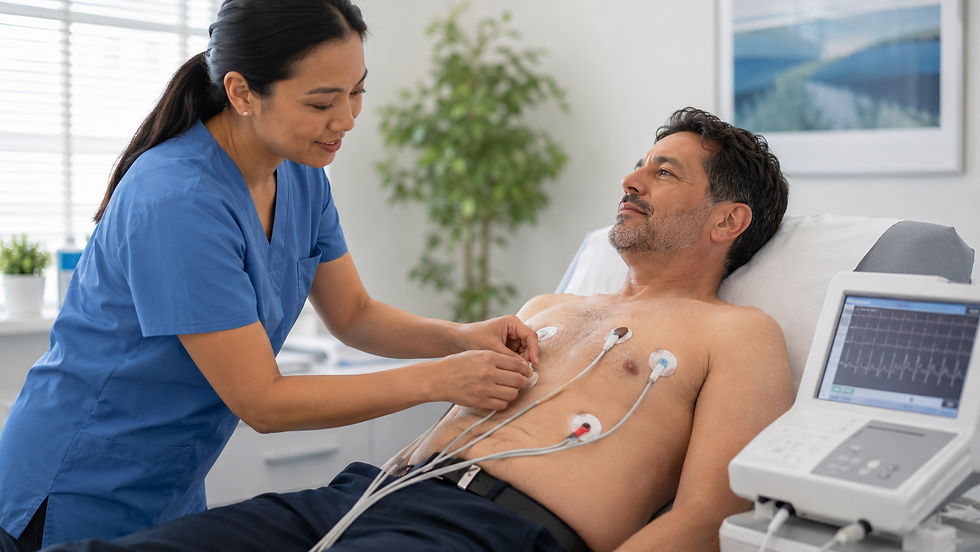
An EKG, also called an ECG or electrocardiogram, is a test that records the electrical activity of the heart. It is commonly used to evaluate heart rhythm, heart rate, and certain signs of heart strain or injury.
An EKG can be very helpful, but it does not tell everything about the heart.
What does an EKG show?
An EKG can show:
Heart rate
Whether the rhythm is regular or irregular
Electrical signal patterns
Certain rhythm abnormalities
Possible signs of a current or prior heart attack
Possible heart enlargement or strain
Certain medication-related electrical changes
An EKG can show how fast the heart beats, whether the heartbeat is steady or irregular, and the strength and timing of electrical signals in different parts of the heart.
Why an EKG may be ordered
An EKG may be considered if you have:
Chest discomfort
Palpitations
Irregular heartbeat sensation
Dizziness
Fainting
Shortness of breath
Certain medication monitoring needs
High blood pressure concerns
History of heart disease
Abnormal heart rate
What an EKG cannot tell you
An EKG cannot rule out every heart problem. A normal EKG does not always mean the heart is completely healthy. Some heart problems come and go. Some require blood tests, imaging, stress testing, longer rhythm monitoring, or emergency evaluation.
An EKG may not fully evaluate:
Intermittent palpitations
Blocked arteries without active changes
Heart failure severity
Valve disease severity
Blood clots
All causes of chest pain
All causes of shortness of breath
When an EKG is urgent
Do not wait for a routine outpatient EKG if you have symptoms that could be an emergency.
Call 911 or seek emergency care for:
Chest pain or pressure
Trouble breathing
Fainting
Severe dizziness
New weakness on one side
Facial drooping
Difficulty speaking
Severe sweating with chest discomfort
Pain spreading to jaw, neck, back, or arm
Severe palpitations with weakness or shortness of breath
Can telehealth help?
Telehealth can help determine whether your symptoms may need urgent care, in-person evaluation, or outpatient EKG referral. If you are having active chest pain, severe shortness of breath, fainting, or stroke-like symptoms, emergency care is needed.
EKG and medication safety
Some medications can affect heart rhythm or the electrical timing of the heart. In some cases, an EKG may be used before or during treatment to improve medication safety.
Final thought
An EKG is a useful test, but it is only one part of heart evaluation. Symptoms, risk factors, vital signs, labs, imaging, and clinical judgment all matter.
This information is for educational purposes only and does not replace medical advice, diagnosis, or treatment. If you are experiencing severe symptoms, signs of infection, severe allergic reaction symptoms, trouble breathing, or a medical emergency, call 911 or go to the nearest emergency room.

Comments